Returns· US · UK · AU · CA

How to Reduce Clothing Returns in Ecommerce (2026 Guide)

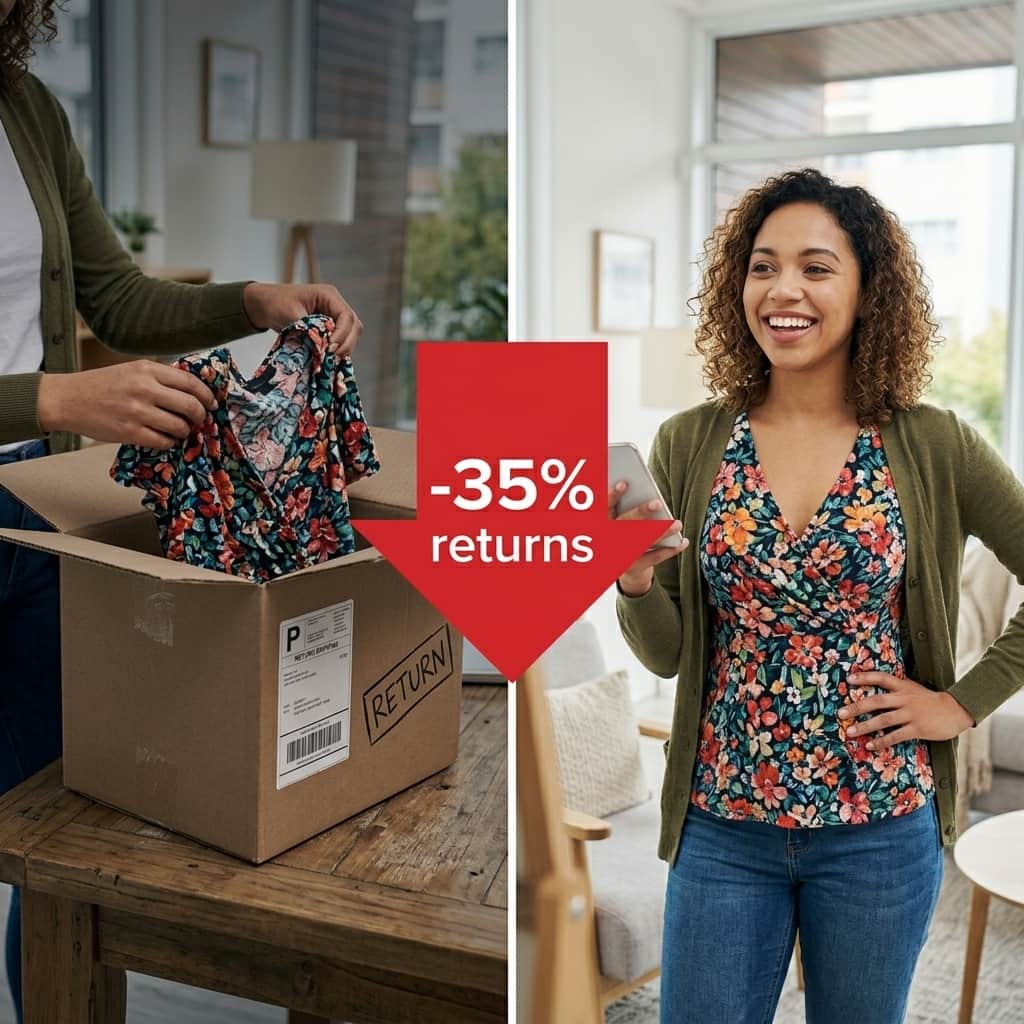
Online clothing returns are costing ecommerce retailers billions every year. If your return rate is above 25%, you're leaving serious money on the table — and frustrating customers in the process. This guide covers 7 proven strategies to cut your clothing return rate by up to 35%.
NA
Naveen Allem

Founder & CEO, TryOnCloud

March 26, 2026

8 min read

The average online clothing store loses 30–40% of revenue to returns. For a store turning over $500,000/year, that's $150,000–$200,000 in merchandise flowing back through your door — each return costing $15–25 to process. The fashion industry's return problem is structural, but it is solvable. The stores winning in 2026 are those deploying a mix of smarter product presentation and AI technology to close the gap between what customers expect and what they receive.

38%

Average online apparel return rate

Online clothing returns are 3–4× higher than in-store. The primary driver: customers cannot accurately assess fit and appearance before purchase.

Why Clothing Returns Are So High

Understanding the root causes of clothing returns is essential before you can fix them. According to research by Narvar, Barclaycard, and the National Retail Federation, the top reasons customers return online clothing purchases are consistent across markets: the item didn't fit (42%), the item looked different in person than online (29%), the quality didn't match expectations (14%), and the customer simply changed their mind (9%). Notice that three of those four reasons are directly related to information failure — the customer didn't have enough accurate information at the point of purchase.

This is why digital-first solutions like AI virtual TryOn have such a dramatic impact on return rates. When a customer can see exactly how a garment looks on their own body — not on a model who is 5'11" and a size 2 — they make a more informed decision. The "it looked different online" and "fit" reasons are both directly addressed in a single step.

The Serial Returner Problem

A significant portion of returns come from a small number of "serial returners" — customers who deliberately over-order to try multiple options at home before keeping one item. Barclaycard research found that 9% of UK online shoppers deliberately overbuy with the intention of returning. These customers are profitable to acquire but expensive to serve. Virtual TryOn directly tackles this behaviour by giving customers the equivalent of a home fitting room before they click "buy".

The Real Cost of Returns to Your Business

Most merchants focus on the visible cost of returns: the shipping label, the restocking labour, the customer service interaction. But the true cost goes much deeper. Returned garments often cannot be resold at full price — they may be slightly worn, repackaged, or simply out of season by the time they are processed. Industry data suggests that 15–20% of returned apparel ends up in landfill or is liquidated at a fraction of its original value.

There is also a significant hidden cost in customer lifetime value. Research from Forrester shows that customers who have a poor return experience are 3× more likely to churn — even if the return itself was "successful." The friction of returning damages the relationship even when you handle it well.

Cost CategoryPer ReturnMonthly (1k orders, 35% return rate)
Return shipping label$6–10$2,100–3,500
Restocking / quality check$3–5$1,050–1,750
Customer service handling$2–4$700–1,400
Revenue loss from delayed resale$4–8$1,400–2,800
Write-downs / liquidation (15%)$2–4$700–1,400
Total (estimated)$17–31$5,950–10,850

Return Rate Benchmarks by Region

Return rates vary significantly by geography, partly due to consumer culture, partly due to logistics infrastructure, and partly due to legal consumer rights. Germany has the highest return culture in Europe — the right to return online purchases is deeply embedded in consumer behaviour, and retailers like Zalando have historically offered free returns, training customers to buy multiple sizes routinely. The UK and US have similarly high rates, driven by fast fashion and aggressive free return policies from Amazon and ASOS.

MarketAvg. Online Clothing Return RatePrimary Driver
🇩🇪 Germany41%Legal right to return, free return culture
🇬🇧 United Kingdom35%Fast fashion, ASOS/Next free returns norm
🇺🇸 United States30%Amazon effect, size inconsistency
🇨🇦 Canada29%Seasonal fashion, long delivery times
🇫🇷 France27%Moderate; EU right of withdrawal applies
🇦🇺 Australia28%Seasonal inversions, sizing confusion (US vs AU)
🇮🇳 India22%COD returns, size chart discrepancies
🇦🇪 UAE18%Premium shoppers; lower volume returns

7 Strategies to Reduce Clothing Returns

No single tactic eliminates returns — but a layered approach combining better product information, smarter technology, and clearer policies can realistically cut your return rate by 20–35% within 90 days. Here are the seven strategies with the highest proven impact, ranked by ROI-to-effort ratio.

1. Deploy AI Virtual TryOn

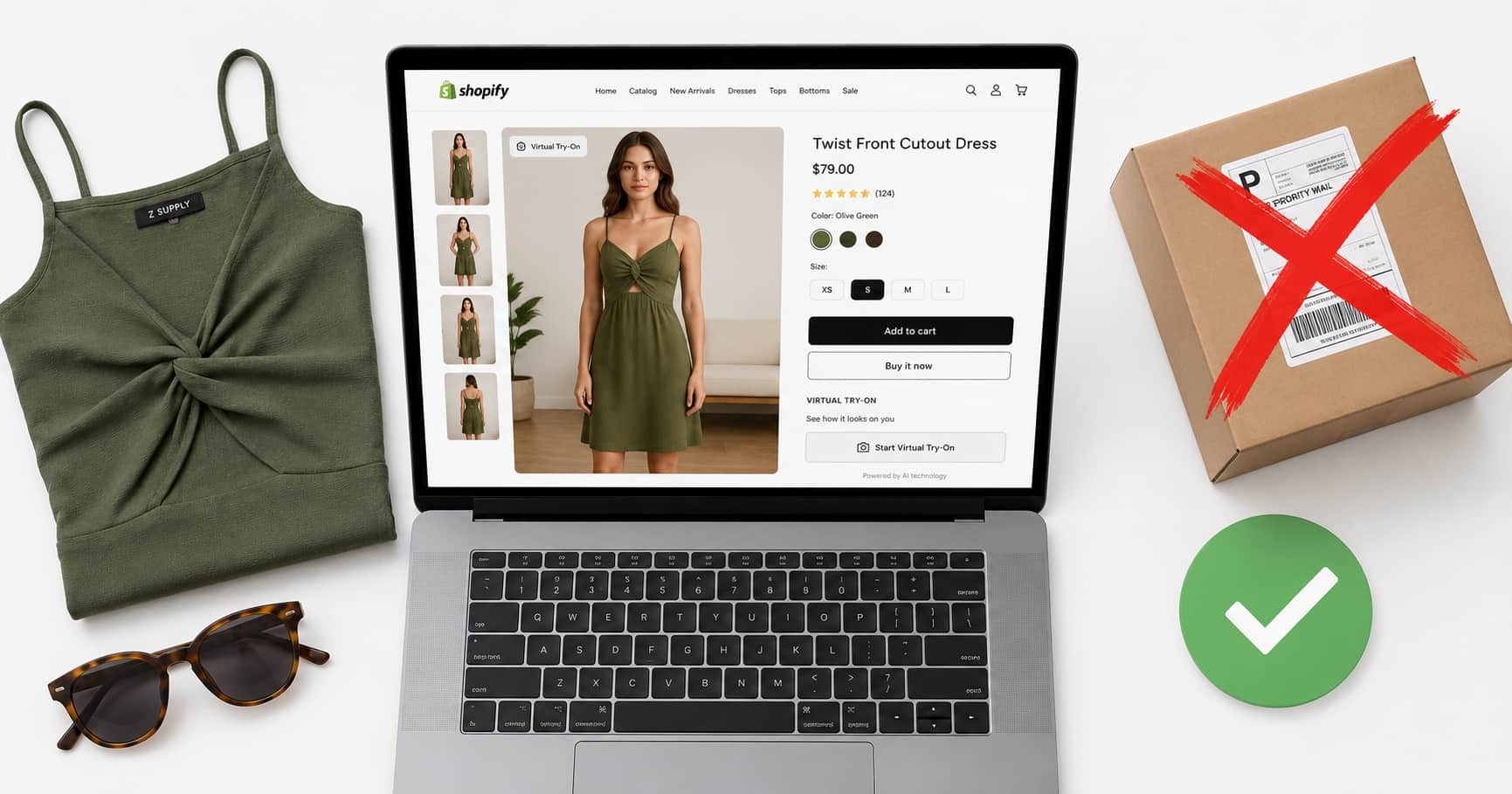
This is the single highest-leverage change you can make. AI virtual TryOn lets shoppers upload a photo of themselves and see how a specific garment looks on their own body — in 15–20 seconds. The technology directly eliminates the two biggest return drivers: fit uncertainty and appearance disappointment. TryOnCloud integrates with both Shopify and WooCommerce in under 10 minutes, with no coding required. Merchants using virtual TryOn report return rate reductions of 25–35% within the first 60 days.

2. Publish Detailed, Consistent Size Guides

Size inconsistency is the #1 return driver. Your size guide should include measurements in both inches and centimetres, a fit guide explaining whether items run small/large, and a comparison table if you sell multiple brands with different sizing conventions. Embedding the size guide directly on each product page (not buried in a footer link) reduces fit-related returns by 12–18%.

3. Use Multi-Angle, On-Model Photography

Flat-lay photography still dominates in many mid-market fashion stores — but it dramatically under-represents how a garment behaves on a body. Investing in on-model photography from front, side, and back angles reduces the "it looked different online" return reason by up to 20%. Showing the same garment on models of different heights and body types reduces this further.

4. Add User-Generated Content (UGC)

Customer photos and reviews showing real people wearing your products are among the highest-trust signals in ecommerce. Platforms like Yotpo, Okendo, and Loox allow customers to add photos with their reviews. Stores with UGC photo reviews see 15–23% lower return rates for products where reviews exist, because buyers have authentic reference points beyond professional photography.

5. Write Honest, Specific Product Descriptions

Vague descriptions like "flowy and comfortable" invite returns. Specific descriptions mentioning fabric weight (in gsm), stretch percentage, exact measurements at size M, care instructions, and honest notes like "this style runs one size small — we recommend sizing up" reduce expectation mismatch. Including the garment's measurements on the model ("model is 5'7" wearing size S") gives buyers an accurate visual reference.

6. Offer Free Exchanges Instead of Free Returns

Studies show that when stores shift from free returns to "free exchange, paid return" policies, return volumes drop 15–20% without significantly hurting conversion rates or customer satisfaction — provided the exchange process is frictionless. Many customers returning for size reasons will happily exchange instead of returning if the exchange is easy and fast.

7. Post-Purchase Fit Confirmation Emails

A simple post-purchase email sent 2 days after delivery — "How does your [product name] fit? Let us know and we'll help you get it right" — with a direct link to exchange or size guide catches fit issues before they become return requests. Proactive outreach reduces return rates by 8–12% and significantly improves NPS scores.

Virtual TryOn: The #1 Return Reduction Tool

Of all seven strategies above, AI virtual TryOn consistently delivers the highest return-on-investment for fashion ecommerce stores. Unlike photography upgrades or size guide revamps — which require ongoing production spend — virtual TryOn is a one-time integration that works automatically on every product page, every visit, 24/7. The technology has matured dramatically since 2022 and is now accessible to small and medium-sized merchants, not just enterprise retailers.

TryOnCloud uses advanced generative AI models to produce photorealistic TryOn results in 15–20 seconds. Customers upload a single photo, select a product, and see themselves wearing it instantly — on their own body, in their own environment. The virtual TryOn features include customisable button placement, brand colour matching, and full analytics so you can see exactly which products customers try on most — and optimise accordingly.

How TryOnCloud Reduces Returns — At a Glance

  • Customer uploads photo → sees themselves in the garment in 15–20 seconds
  • Eliminates 'it didn't look right on me' returns (29% of all returns)
  • Eliminates 'fit was wrong' surprises by setting accurate expectations
  • Merchants report 25–35% return rate reduction within 60 days
  • Works on Shopify and WooCommerce — no coding, 10-minute setup
  • 7-day free trial · Paid plans from $19/month

ROI: Does It Pay to Fix Your Return Rate?

Let's run a simple ROI calculation for a Shopify store doing $500k/year in clothing sales with a 35% return rate. That's 350 returns per 1,000 orders. At an average return processing cost of $20, the store is spending $7,000/month on returns — $84,000/year. Reducing the return rate by 30% (from 35% to 24.5%) saves 105 returns/month × $20 = $2,100/month = $25,200/year in direct processing costs. Add recovered revenue from items that would have been returned and resold below cost, and the total benefit is typically $30,000–$40,000/year for a store of this size.

Against that, TryOnCloud's simple pricing plans start at a fraction of that figure — meaning the typical payback period is measured in weeks, not months. Most merchants see positive ROI within the first 30 days of activation. The 7-day free trial lets you validate the impact with zero financial risk before committing to a paid plan — which starts at just $19/month.

30×

Typical ROI within 12 months

For a $500k/year clothing store reducing returns by 30%, the net annual benefit of virtual TryOn typically exceeds the subscription cost by 20–30×.

Frequently Asked Questions

The global average return rate for online clothing and apparel is 30–40%. In Germany it reaches 41% — the highest in Europe. In the US it averages around 30%, the UK around 35%, and Australia around 28%. These figures are 3–4× higher than in-store return rates, primarily because customers cannot try items on before purchasing.

Start Reducing Returns Today

Add AI virtual TryOn to your Shopify or WooCommerce store in 10 minutes. 7-day free trial — no credit card required. Paid plans from $19/month.